Health insurance selection in the United States diverges significantly between individual and family needs due to differences in healthcare utilization patterns, financial exposure, and risk distribution, making plan structure, cost layering, and provider network design critical variables in determining optimal coverage; the leading insurers shaping this landscape—Kaiser Permanente, Blue Cross Blue Shield, UnitedHealthcare, Aetna, and Cigna—offer structurally different solutions that cater to these distinct categories, requiring evaluation across plan tiers, cost-sharing mechanisms, and long-term financial implications rather than superficial premium comparisons. Individual plans are typically optimized for lower utilization scenarios, where policyholders prioritize minimal monthly premiums and accept higher deductibles, while family plans must accommodate frequent medical interactions, including pediatric care, preventive services, emergency visits, and ongoing treatments, resulting in a fundamentally different cost-benefit analysis that prioritizes reduced out-of-pocket exposure over premium minimization.
Within the framework of the Affordable Care Act, plans are categorized into Bronze, Silver, Gold, and Platinum tiers, each representing a predefined actuarial value that determines how healthcare costs are split between insurer and policyholder, with Bronze plans covering approximately 60% of costs, Silver 70%, Gold 80%, and Platinum 90%, thereby directly influencing affordability and risk exposure; for individuals with low expected healthcare usage, Bronze plans present the lowest monthly premiums but impose deductibles often exceeding $6,000, creating a high threshold before insurance benefits activate, whereas Silver plans offer a more balanced approach and are further enhanced by cost-sharing reductions for eligible income groups, making them the most widely selected option across both individual and family categories. Gold and Platinum plans, although carrying substantially higher premiums, significantly reduce deductibles, co-payments, and co-insurance, making them structurally advantageous for families or individuals with chronic conditions, ongoing prescriptions, or predictable healthcare needs, as they shift financial burden from unpredictable out-of-pocket expenses to stable monthly payments.
For individual policyholders, especially younger and healthier demographics, cost minimization strategies dominate decision-making, leading to a preference for high-deductible health plans (HDHPs) that can be paired with Health Savings Accounts (HSAs), enabling tax-advantaged savings for medical expenses while maintaining low premiums; insurers like Oscar Health have capitalized on this segment by offering technology-driven plans with integrated telemedicine, simplified user interfaces, and transparent pricing structures, reducing administrative overhead and appealing to digitally engaged consumers who prioritize convenience and occasional care access over comprehensive coverage. In contrast, Kaiser Permanente provides a cost-efficient alternative for individuals willing to operate within a closed network, leveraging its vertically integrated model to reduce administrative duplication and negotiate internal pricing, thereby offering lower premiums and predictable cost structures, though at the expense of provider flexibility.
Family health insurance introduces compounded complexity due to the aggregation of multiple risk profiles within a single policy, requiring plans that balance premium affordability with controlled out-of-pocket exposure across diverse healthcare needs, including pediatric visits, vaccinations, maternity care, specialist consultations, and emergency services; in this context, Silver and Gold plans dominate due to their ability to distribute costs more evenly, preventing extreme financial spikes associated with high deductibles. The average annual premium for employer-sponsored family coverage in the United States approaches $27,000, illustrating the scale of financial commitment and reinforcing the necessity of optimizing plan selection beyond surface-level pricing. Blue Cross Blue Shield is frequently positioned as a leading option for families due to its extensive provider networks and regional adaptability, ensuring access to pediatricians, specialists, and hospitals across multiple geographic locations, which is particularly relevant for households with varying healthcare needs or those residing in areas with limited provider density.
UnitedHealthcare further expands family plan value through its extensive network scale and integrated digital tools, offering services such as telehealth consultations, wellness programs, and care coordination systems that reduce friction in accessing healthcare, while its broad PPO offerings provide flexibility for families requiring specialist access without referral constraints; however, this flexibility introduces higher premium costs, requiring careful evaluation against expected healthcare utilization. Aetna differentiates itself in the family segment through integration with CVS Health, embedding pharmacy services, retail clinics, and preventive care programs into its ecosystem, thereby reducing logistical barriers and potentially lowering long-term healthcare costs through early intervention and medication adherence programs.
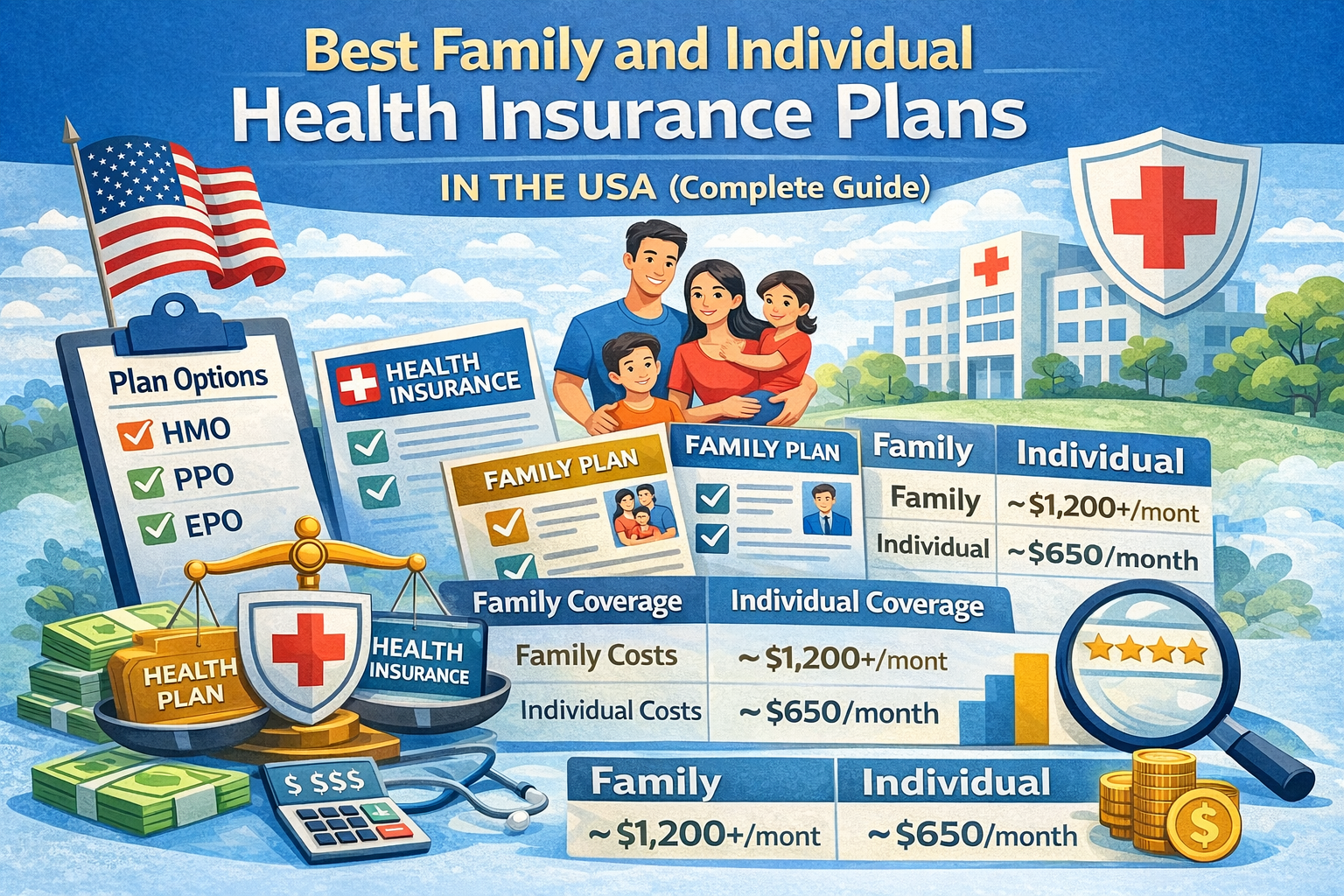
Cost structure remains the central determinant in evaluating both individual and family plans, extending beyond premiums to include deductibles, co-payments, co-insurance, and out-of-pocket maximums, which collectively define total annual expenditure; Bronze plans may offer premiums as low as $350–$500 per month for individuals but expose policyholders to high deductibles and out-of-pocket maximums approaching $9,000, while family plans scale these figures significantly, increasing both premiums and potential financial exposure. Silver plans, often priced between $450 and $750 monthly for individuals, provide moderated deductibles and are eligible for subsidies under the Affordable Care Act, effectively reducing net costs for qualifying households, while Gold plans, though exceeding $700–$1,000 per month in many regions, cap out-of-pocket expenses more aggressively, making them financially rational for families with consistent healthcare usage. Deductibles for family plans can exceed $10,000 collectively, reinforcing the importance of selecting plans that align with expected medical needs rather than defaulting to lower premiums.
Network structure further influences plan suitability, with HMO plans offering the lowest costs but restricting provider choice, making them suitable for individuals or families willing to operate within defined networks, while PPO plans provide broader access at higher costs, enabling out-of-network care and specialist consultations without referrals; EPO plans eliminate out-of-network coverage but maintain moderate pricing, serving as a compromise between cost and flexibility. Kaiser Permanente operates primarily through HMO-style plans, optimizing cost efficiency and care coordination, while UnitedHealthcare and Blue Cross Blue Shield emphasize PPO availability, reinforcing accessibility and choice, particularly for families with diverse healthcare requirements.
Additional benefits increasingly differentiate insurers beyond core coverage, with preventive care, mental health services, telehealth, and wellness programs becoming standard components of competitive plans; Cigna emphasizes global coverage and wellness integration, making it structurally advantageous for families requiring international healthcare access or comprehensive mental health support, while Aetna leverages retail healthcare integration to simplify access to routine services and medications. Preventive care coverage, mandated under the Affordable Care Act, plays a critical role in reducing long-term costs, particularly for families, by enabling early detection and management of health conditions before they escalate into high-cost treatments.
Subsidies and employer contributions significantly alter the affordability landscape, with premium tax credits and cost-sharing reductions reducing effective costs for eligible individuals and families purchasing plans through ACA marketplaces, while employer-sponsored insurance absorbs a substantial portion of premium costs, shifting the evaluation focus toward deductibles and out-of-pocket exposure rather than total premium amounts. These financial mechanisms create variability in perceived affordability, making direct comparisons between individuals and families contingent on subsidy eligibility, employment status, and geographic pricing differences.
The comparative outcome across insurers and plan types is not absolute but conditional, defined by alignment between healthcare needs, financial capacity, and risk tolerance; individuals with minimal healthcare usage benefit from low-premium, high-deductible structures, while families require balanced or high-tier plans that stabilize costs across multiple users and frequent medical interactions. Kaiser Permanente provides cost-efficient, coordinated care for those prioritizing predictability, Blue Cross Blue Shield ensures network breadth and regional reliability, UnitedHealthcare delivers unmatched scale and flexibility, Aetna integrates pharmacy and preventive services, and Cigna extends coverage into global and wellness domains. The optimal plan emerges not from brand hierarchy but from structural compatibility between plan design and the user’s healthcare consumption profile, ensuring controlled total expenditure and consistent access to necessary medical services.